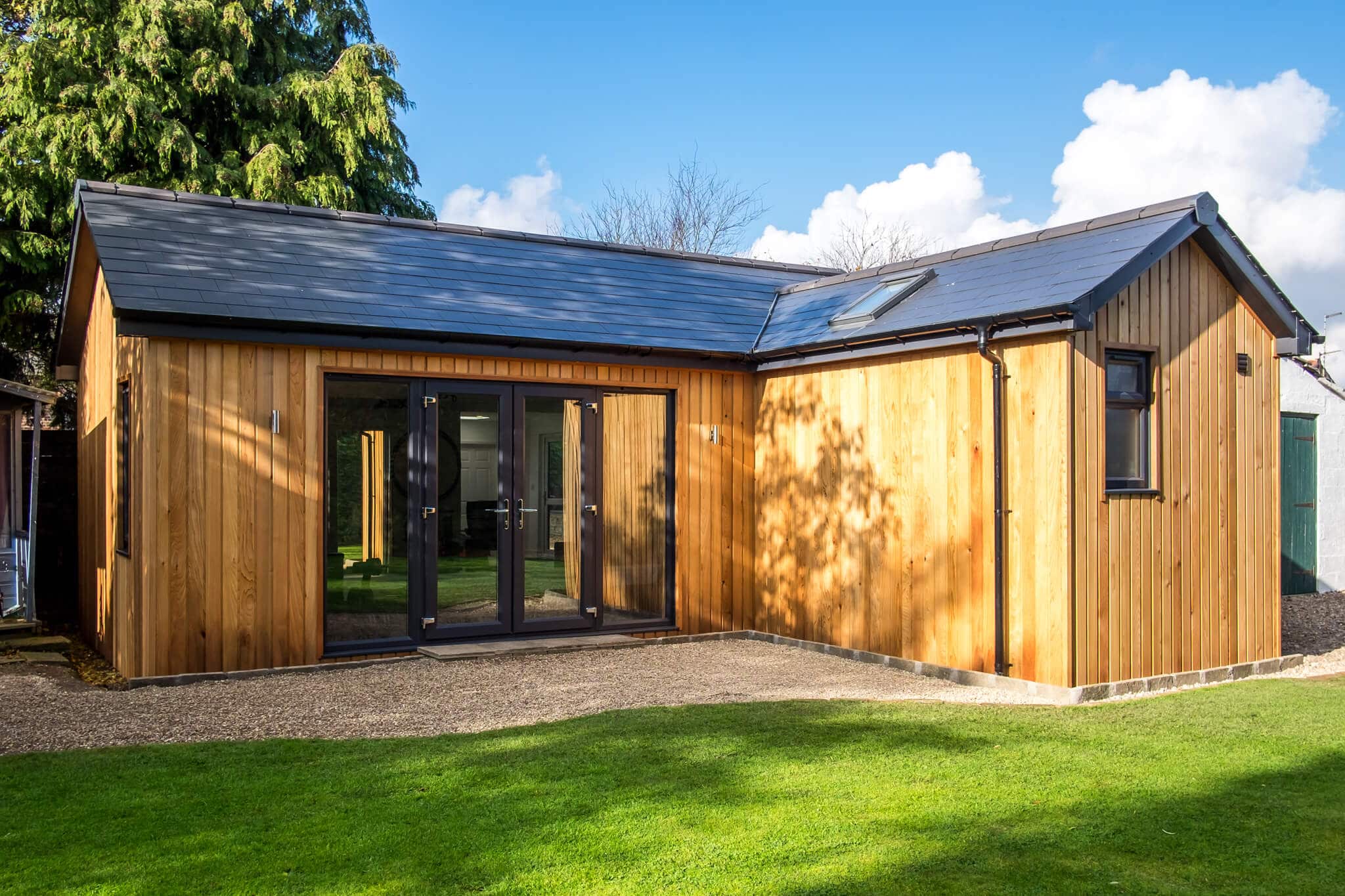
Dealing with condensation in the garden room isn’t just an unpleasant problem. It can also cause damage to the building by allowing mould and mildew to develop, along with an unpleasant smell.
What’s more, condensation can leave stains on furnishings, walls, crumbling plaster, and cause rotting woodwork. When you find condensation in a garden room, it must be dealt with at once to avoid deterioration of the structure and space materials.
What is Condensation?
After taking a shower, you’ve probably noticed the bathroom is filled with steam. Next, you may notice that water droplets are running off the mirror and windows. These water droplets are condensation. The droplets are formed when warm air meets a cold, non-porous surface, such as a window. Condensation is usually worse in the winter and cooler months of the year.
During the winter months, humidity is more of a problem in our homes and garden rooms. Wet air becomes trapped in these spaces when the heat’s turned up, and windows are closed. Once the temperature outside drops, liquid water begins to form on the inside of your home and garden room.
Condensation may seep under paint, wallpaper, tiles, and more in the garden room. The condensation may cause cracking, distorting, and blistering. And it can warp and ruin the wood used to build a garden room.
Why Do Garden Rooms Create Condensation?
During the colder months, a garden room may be heated. As the space in the garden room warms up, the air in the room has a greater capacity to hold moisture (humidity or water vapour). The moisture becomes trapped inside the space, and we don’t notice until the humidity in the air begins to condensate.
What Causes Condensation in a Garden Room?
Condensation (humidity) is created in many different ways in the garden room. For instance, if you use a kettle in the space, this may create excess moisture. Showering, cooking, and even breathing create humidity in a garden room. Even drying clothes in the garden room is enough to make condensation.
So, any activity that generates moist air can cause condensation in a garden room. What’s more, the smaller the space, the higher the chance the garden room will develop condensation on windows and other non-porous surfaces.
Two Types of Condensation
It’s also important to understand there are two different types of condensation that can affect the garden room, surface condensation, and interstitial condensation.
Surface condensation happens when droplets of water form on cold, non-porous surfaces in the garden room. The most common surface is window glass. This is the same type of condensation that forms when you take a shower in the bathroom, and the mirror and windows are water droplets running down.
Interstitial condensation forms the same way; however, this type of condensation works into fabric, walls, floors, and the roof. The condensation may also damage the insulation and the structure of the building. However, it can be difficult to see the damage caused by this form of condensation. It usually takes an expert to find the signs of interstitial condensation.
Even so, you may notice these signs of interstitial condensation in walls and roofs:
- Cold spots on walls (the insulation has become saturated with moisture)
- Mould growth
- Mildew
- Staining behind drywall and around baseboards (usually behind furniture)
- Corrosion of building components
- Frost damage to exterior finishes, roofs, or masonry
- And more
How to Stop Condensation in Garden Rooms
Is there any way to stop condensation in garden rooms? We’re happy to let you know there are steps you can take to keep condensation from forming in the garden room! The key is to use these methods from the very beginning, when your garden room is new, and keep using these methods to avoid problems from dampness and condensation in the future.
1. Ventilation
Today’s modern structures are usually sealed well and contain plenty of insulation. They also used double or even triple-glazed windows and doors to keep the space warm and free of draughts.
However, without the proper ventilation, our buildings may develop condensation issues. For this reason, properly ventilating the garden room helps remove moisture from the space and allows fresh air in.
Using these methods to vent your garden room:
- Install a roof vent and/or skylight
- Installation of wall/door vents
- Use an electric fan or an extractor fan
- Open doors and windows regularly
2. Heating
Keeping the garden room heated can also help prevent condensation and damp. However, it’s best to use a low-level heat in the space. That’s because sudden changes in temperature can make condensation worse. So, most experts recommend underfloor heating to keep the garden room at an even temperature during the cooler months.
3. Use a Dehumidifier
Another way to remove excess moisture from the air is by using a dehumidifier in the garden room. A dehumidifier is a device that contains a reservoir where moisture is collected from the air. There are many types of dehumidifiers available, and it’s necessary to match the dehumidifier to the size of your garden room for effective removal of moisture.
4. Keep Furniture & Appliances Away from Walls
When furniture and appliances are placed too close to the walls of your garden room, they’re not properly ventilated. That means damp can build up around and behind anything placed too close to walls.
So, if placing appliances and furniture near garden room walls, ensure there’s a gap between them and the wall. This allows for adequate airflow and ventilation to keep things dry.
5. Install a Solar Ventilation Fan
Another option is to use a solar ventilation van to improve garden room ventilation and ventilation grilles. A solar fan works automatically to keep the garden room ventilated. However, this method only works in direct sunlight, so it’s still necessary to use other methods combined with the solar fan to keep the space adequately ventilated.
Summing It Up
Garden rooms are a wonderful way to add more space to your home without all the disruption caused by a home renovation. However, they can develop problems with condensation and dampness. So, it’s necessary to ensure the space has adequate ventilation.
You can use one or more of the tips in our article to keep your garden room free of condensation and damp!