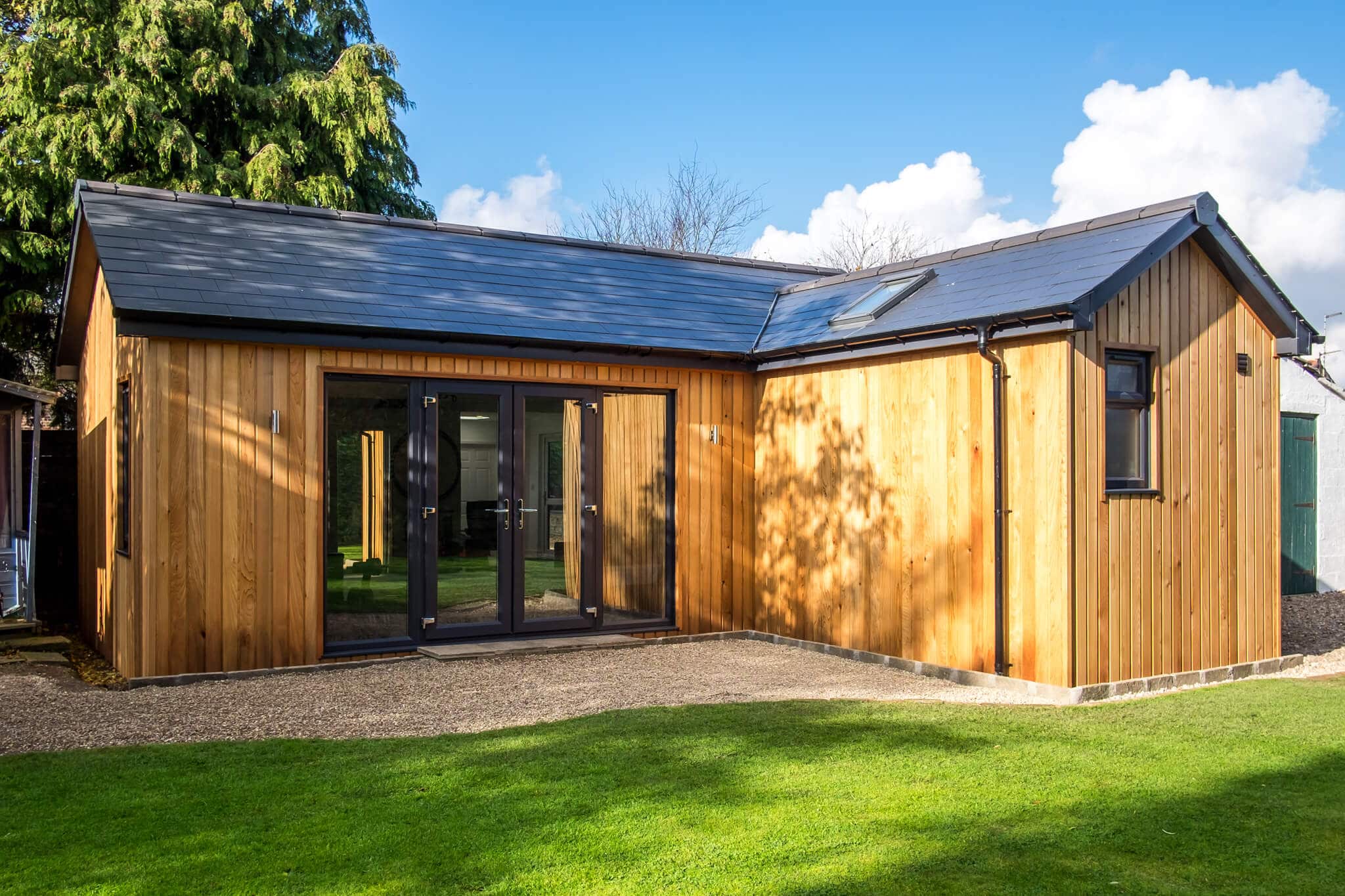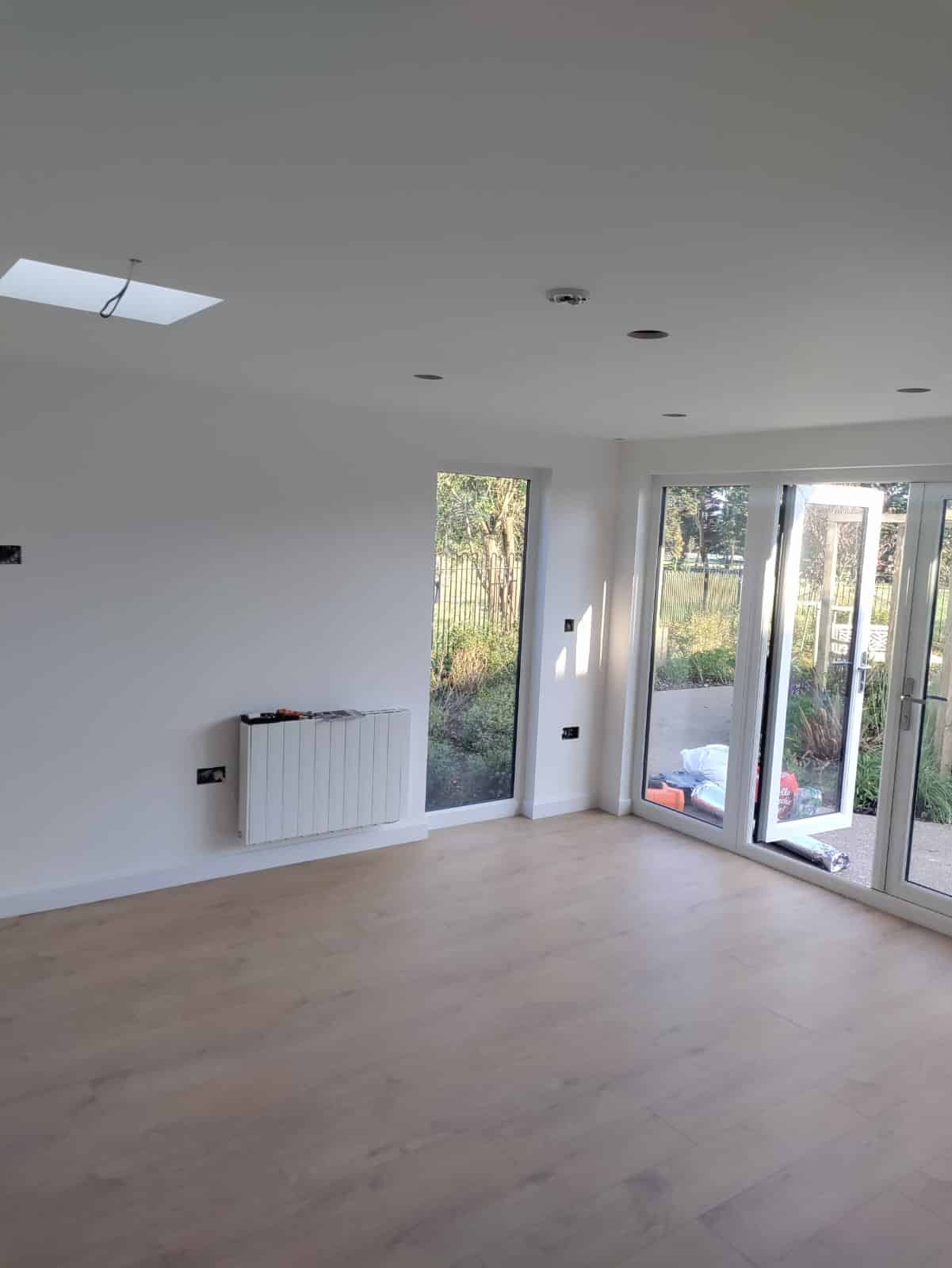
Choosing the best flooring for garden room use is not quite the same as choosing flooring for the house. A garden building sees more foot traffic straight from the lawn, often has large glazed doors that let in strong sunlight, and may be used for anything from yoga to heavy weights.
The right floor depends mainly on what the room is for. Below, we look at the most common materials and then match them to typical uses.
Flooring Materials at a Glance
Luxury Vinyl Tile (LVT)
Water-resistant, warm underfoot, hard-wearing and available in convincing wood and stone effects. Our most frequently recommended all-rounder.
Laminate
Affordable and attractive, but less tolerant of moisture. Best for dry rooms with little traffic from the garden.
Engineered Wood
Real timber on a stable core, so it copes with temperature changes better than solid wood. Beautiful, but needs more care.
Rubber Flooring
Dense, shock-absorbing and protective. The standard choice for garden gyms with free weights.
Carpet or Carpet Tiles
Soft, warm and good for acoustics. Suits quiet rooms, but less practical near a garden door.
Porcelain Tiles
Extremely durable and easy to clean, though cold underfoot without underfloor heating.
Matching Flooring to How You Use the Room
If you are unsure, start with the room’s main purpose.
- Garden office: LVT or engineered wood. Why: Comfortable, smart and easy for chair castors
- Garden gym: Rubber flooring, possibly over LVT. Why: Protects the structure and absorbs impact
- Art or craft studio: LVT or sealed vinyl. Why: Wipe-clean and resistant to paint and water
- Yoga or therapy room: LVT, cork or soft carpet tiles. Why: Warm and quiet underfoot
- Garden lounge: LVT, engineered wood or carpet. Why: Comfort and a homely finish
Why the Best Flooring for Garden Room Use Starts Below the Surface
A floor is only as good as what sits beneath it. In a garden building, the floor needs to be insulated, level and protected from ground moisture. Without that, even the best flooring can feel cold or lift and move over time.
Our buildings include an insulated floor structure as standard, which gives you a warm, stable base for whichever finish you choose. If you plan to lift heavy weights, we can reinforce the floor at the design stage.
Three Things to Think About Before You Choose
Sunlight. Large south-facing doors can fade some floor finishes. LVT and good-quality laminate are generally more resistant than natural wood or carpet.
Temperature. Garden rooms may be left unheated for periods, especially if used occasionally. Choose materials that tolerate temperature changes, and leave expansion gaps as the manufacturer recommends.
Transition from the garden. If you will be walking straight in from the lawn, a hard-wearing floor and a good entrance mat will keep the room looking clean for longer.
Gym Floors Deserve Special Mention
If your garden room will be a gym, the floor is one of the most important decisions you will make. Dropped weights can damage both the floor finish and the structure below. Thick rubber tiles or mats spread the load, reduce noise and protect your investment. Our garden gyms are designed with reinforced floors for exactly this reason.
Planning Your Garden Room Interior?
Our team can advise on flooring, lighting and fit-out as part of your design. Get in touch.
Best Flooring for Garden Room Use: FAQs
What is the best flooring for a garden room office?
LVT or engineered wood are excellent choices for an office, as they are comfortable, attractive and easy for chair castors to move across.
Is laminate flooring suitable for a garden room?
It can be in a dry, well-insulated room with limited traffic from the garden. In rooms with frequent garden access or any risk of moisture, LVT is a safer option.
What flooring should I use in a garden gym?
Dense rubber flooring is the best choice, as it absorbs impact, protects the floor structure and reduces noise. It can be laid over a hard floor finish.
Can I have underfloor heating in a garden room?
Yes. Electric underfloor heating works well under LVT, tiles and engineered wood. Because our buildings are well insulated, running costs are usually modest.
Will flooring in a garden room fade in the sun?
Some materials, particularly natural wood and carpet, can fade near large glazed doors. LVT generally offers better UV resistance, and blinds help protect any floor.