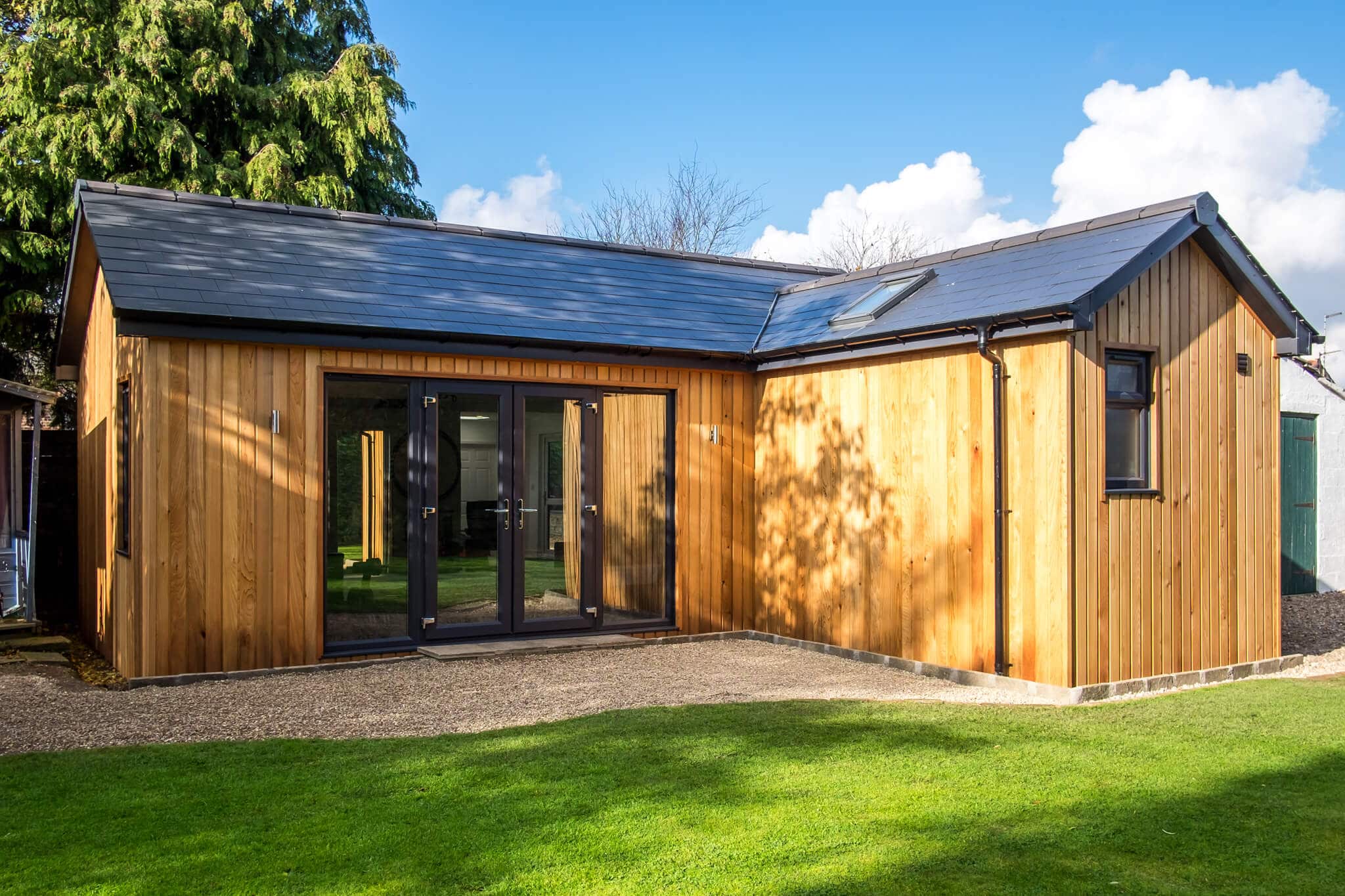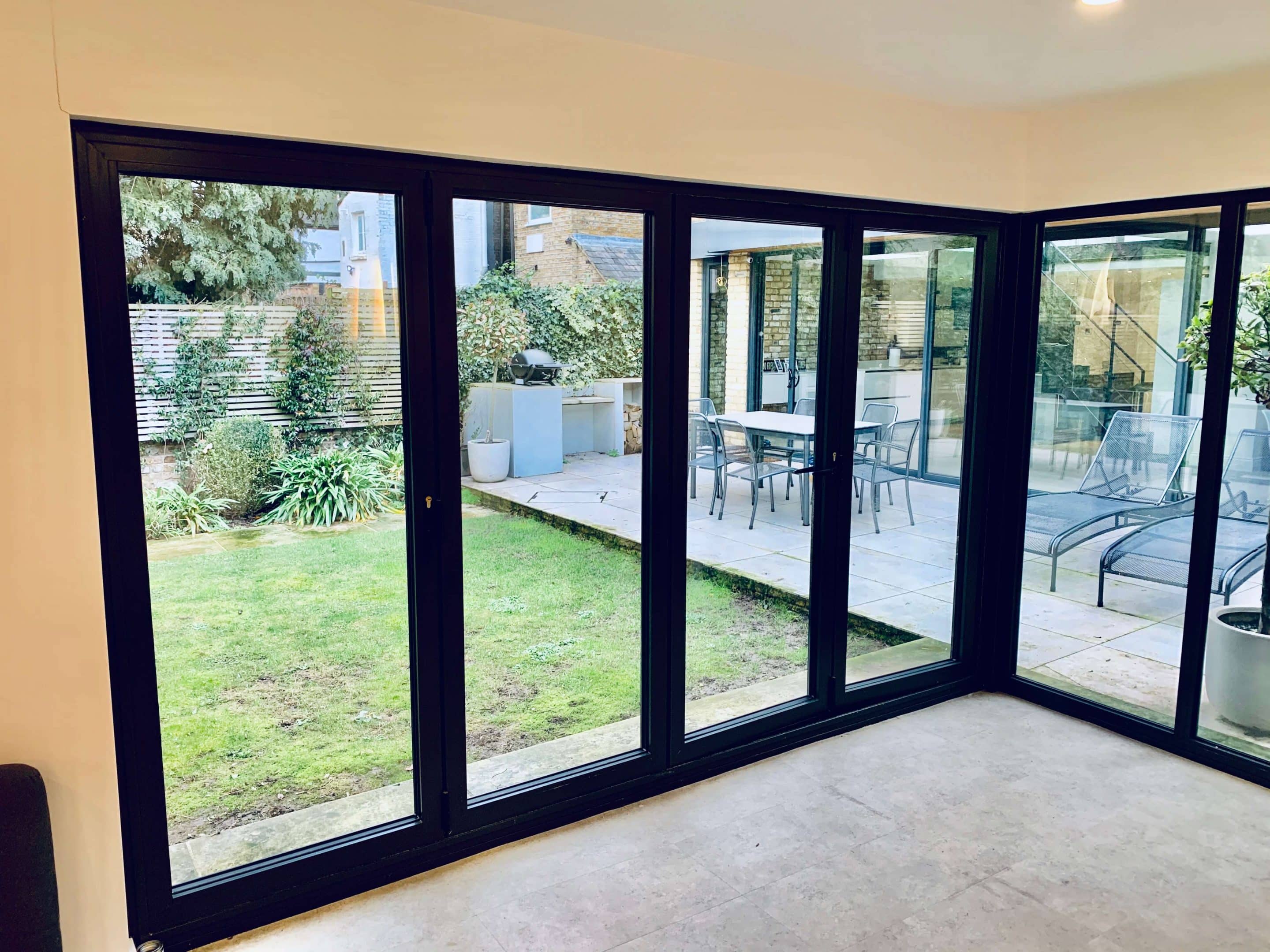
Your choice of garden room windows and doors shapes almost everything about how the building feels: how much light reaches your desk, how warm the room stays in winter, how secure it is and how it connects to the garden.
It is also one of the areas where people most often change their minds during the design process. This guide sets out the main options and the questions worth asking before you decide.
The Main Door Styles
Bifold Doors
Fold back to open almost the entire wall. Ideal for entertaining and summer use, though the folded panels take up some space and the frames are more visible when closed.
Sliding Doors
Large glass panes with slim frames, giving uninterrupted views. They do not swing into the room, which is useful in compact buildings.
French Doors
A classic pair of outward or inward opening doors. Good value and well suited to traditional-style buildings and narrower elevations.
Single Door
A practical choice for gyms, studios or offices where wall space matters more than a wide opening. Often paired with large fixed windows.
Windows: More Than Just Light
Windows do three jobs in a garden room: they let in light, they provide ventilation and they frame the view. The best layouts balance all three.
Fixed panes offer the most glass for the money and good thermal performance, but do not open. Opening casements provide fresh air and are essential for rooms used for exercise or work. High-level windows bring in light while preserving privacy and leaving wall space free below. Rooflights brighten deeper rooms and studios.
Choosing Garden Room Windows and Doors by Use
The right combination depends on what the room is for.
- Garden office: Sliding or French doors. Suggested windows: Side window for cross-ventilation; avoid glazing directly behind the screen
- Garden gym: Single or French doors. Suggested windows: Opening windows for airflow; high-level glazing to keep walls free for mirrors
- Art or craft studio: French or single door. Suggested windows: North-facing glazing or rooflights for even light
- Lounge or entertaining space: Bifold or sliding doors. Suggested windows: Large fixed panes to frame the garden
Glazing and Energy Efficiency
Glass is usually the least insulated part of any building, so specification matters. Double glazing is the standard for year-round garden rooms, with toughened safety glass required for doors and low-level panes. Low-emissivity coatings help keep heat in during winter.
Orientation matters too. A wall of glass facing south will bring in lovely winter sun but can overheat in summer. Overhangs, blinds and opening windows on the opposite side all help. Our article on preventing overheating covers this in more depth.
Security
A garden room often holds expensive equipment, so look for multi-point locking on doors, internally beaded glazing that cannot be removed from outside, and toughened or laminated glass. Good external lighting and a visible alarm add further protection. You can read more in our garden room security tips.
Frame Colour and Style
Anthracite grey remains the most popular frame colour for contemporary garden rooms, while black, white and wood-effect finishes suit other styles. Matching the frames to your house windows or garden furniture helps the building feel like part of the property.
Whatever you choose, it is worth seeing your garden room windows and doors drawn on a proper elevation before you commit. Small changes to their size and position can make a big difference to the finished room.
Get the Glazing Right First Time
Our design team will help you choose windows and doors that suit your garden, your use and your budget. Book a design survey.
Garden Room Glazing FAQs
Are bifold or sliding doors better for a garden room?
Bifolds open the widest gap and suit entertaining, while sliding doors offer slimmer frames, larger glass panels and do not take up space when open. Sliders are often the better choice for offices and compact rooms.
Do garden room windows need to be double glazed?
For a room you plan to use year-round, yes. Double glazing reduces heat loss and condensation and is the standard for insulated garden buildings.
How much glazing should a garden room have?
There is no single rule, but too much glass can make a room cold in winter and hot in summer. Most well-balanced rooms combine one main glazed elevation with smaller windows elsewhere.
What is the most secure door for a garden room?
A door with a multi-point locking system, toughened or laminated glass and internally beaded glazing offers the best protection. Pair it with external lighting and an alarm for extra peace of mind.
Can I add more windows to my garden room later?
It is possible but more disruptive and costly than getting it right at the design stage, as it involves altering the structure and cladding. Planning glazing carefully at the start is the better approach.