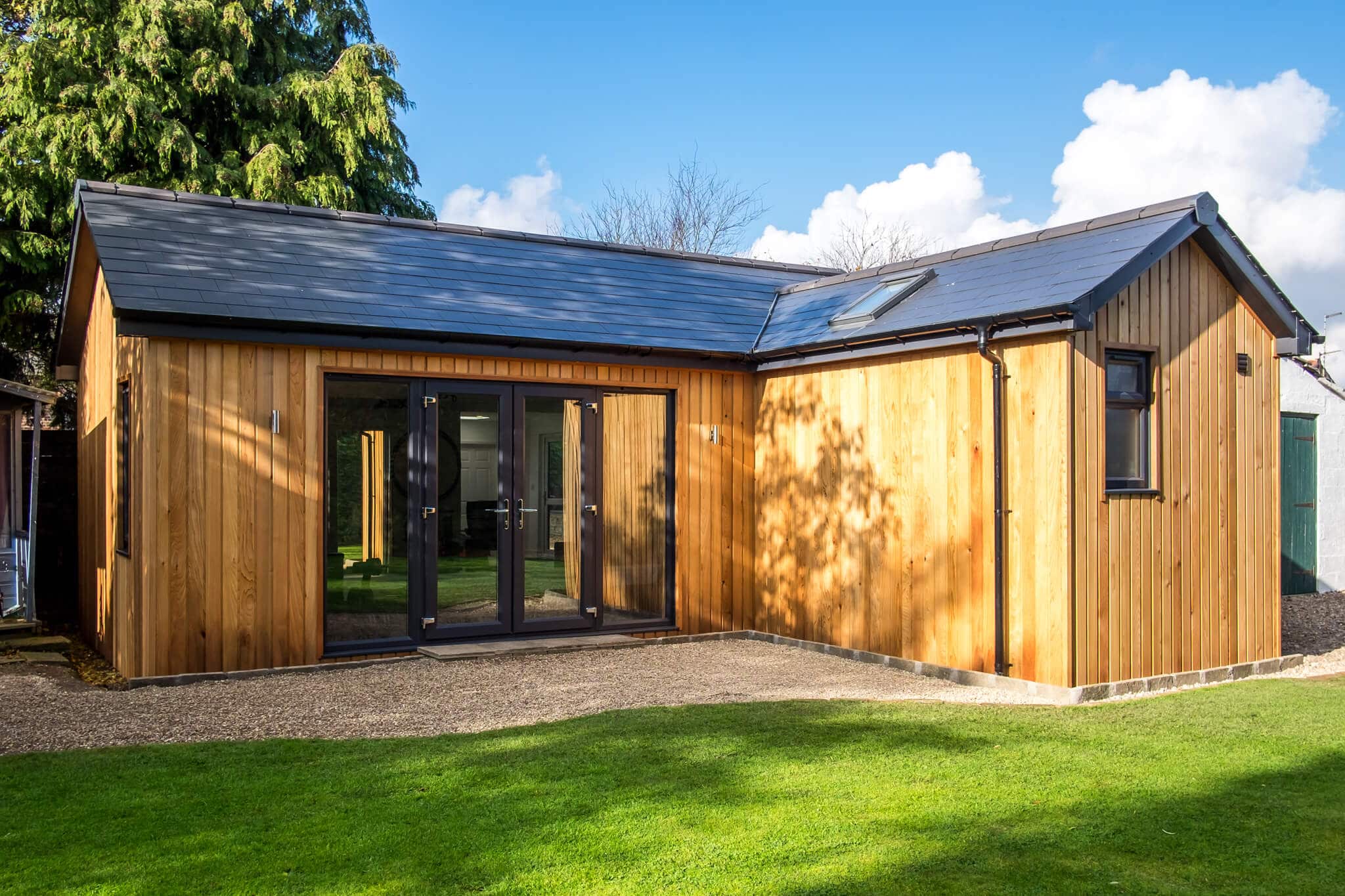
Garden buildings continue to grow in popularity. These versatile structures can be used as a hobby room, a home office, a kids’ playroom, and so much more! But is it possible to build an eco-friendly garden building? We’re happy to say yes; there are ways to ensure your garden room is designed for your needs and still eco-friendly.
What Type of Base Should You Choose?
The first consideration is the type of base for your garden building. The standard options include concrete, decking, or patio slab.
Currently, one of the most popular bases uses the ground screw system rather than a concrete base. These use large, pile-driven screw systems with a timber frame and are a very eco-friendly choice.
But what about concrete? Concrete bases require plenty of preparation work, along with excavation and disposal. On the other hand, ground screws are bored in and levelled. This causes minimal damage and disruption to the garden. Next, brackets are attached to the top of the ground screws, and a timber frame is placed on top and secured to the brackets. The garden building is then built on a timber frame.
What Material is Best for the Building?
Wood is usually the best choice if you want the garden building to be eco-friendly. A timber building can be airtight and keep heat or cool air in. Wood is also breathable, letting moisture out. Timber keeps the garden building warm without becoming stuffy, even with PCs running in the summer. Some timber garden buildings may not even require air conditioning, though it depends on the position of the structure in the garden and how the building will be used.
If you’d like a wooden garden building, it’s a good idea to check for two eco standards. One is the Programme for the Endorsement of Forest Certification (PEFC). This organisation cares for the forests both locally and globally. The other organisation is the Forest Stewardship Council (FSC), an expert in sustainable forest management.
What About Recycled Materials?
It’s also possible to use recycled materials for your garden building. For instance, a builder may reuse the concrete foundations from a demolished building. You save money on new concrete and steel reinforcement, and your garden building becomes instantly eco-friendly.
Another way to ensure your garden building is eco-friendly is to buy upcycled or second-hand furniture. This is more sustainable than buying new furniture and fittings.
What are the Most Eco-friendly Types of Glazing?
Double-glazed doors and windows are highly recommended for eco-friendly garden buildings. They should be made of premium materials. In some places, triple glazing may be even better. Whether you choose double- or triple-glazed doors and windows, these work to keep your home warmer in the winter and cooler in the summer.
Are There Eco-Friendly Roof Options for a Garden Building?
Fortunately, there are also sustainable roofing options you can choose from. For instance, wood shingles from sustainable forest wood (such as cedar) have natural resins that improve their durability. In addition, roof shingles made from waste materials, such as wood fibre, rubber, or plastic, also make great options. You can also find faux slate roofing tiles made from recycled plastic and limestone.
If your garden building has a flat roof, you may want to consider a roof made from EPDM (ethylene propylene diene terpolymer). This is a very durable rubber roof membrane that can last between 30 to 50 years. It’s usually made from recycled rubber, making this a very environmentally-friendly choice.
You may also want to consider a green roof. A green roof design can be long-lasting when properly cared for. The green roof is a living roof that’s partially or entirely covered in vegetation and a growing medium. Green roofs provide habitat for living things, such as plants, animals, and more. They also insulate well, reducing the energy requirements for heating and air conditioning. These roofs also provide soundproofing and absorb rainwater. Having a green roof on your garden building requires that you have a very robust building design, as these roofs can be quite heavy.
What About Green Insulation?
If you opt for a timber building for your garden building, ask for a thick wall that’s between 44mm and 70mm. Install insulation in the roof and floor to limit the amount of energy needed for heating and cooling.
Another option to consider is SIPS (Structural Insulated Panels). These are eco-friendly and make for well-insulated garden buildings. SIPs are made from insulation; you can find SIPs with different thicknesses. These are structural and recyclable. SIPs are highly efficient, and they satisfy all the U-values required for Building Regulations. They are also effective at keeping a garden building cool in the summer.
You can also opt for SuperFOIL insulation, which can be used for walls and concrete slabs. This insulation offers thin build-ups with good thermal efficiency and is fast to install. This also saves floor space when compared to bulkier types of insulation.
How Should I Heat My Garden Building?
Heating a garden building that has a single room is much cheaper than running your central heating in the whole house. You may want to consider electric convection heaters, which are a popular choice for garden buildings. These usually come with 24-hour timers and are thermostatically controlled. They’re also easy on the wallet (not very expensive), and you won’t need a separate energy source if the garden room is wired for electricity. If your energy supply comes from renewable sources, the convection heater can be an eco-friendly choice for heating the garden building.
Another eco-friendly method to heat your garden room is with solar panels that run a heating/cooling unit. However, these can be more expensive. So, make sure to check the prices of these systems before you buy.
Will the Location of My Garden Building Affect Energy Efficiency?
The position and orientation of the garden building can definitely affect energy efficiency. Look to see how the sun moves across the garden and where the light/shade falls. Consider the implications these may have on your garden building.
If possible, it’s best to situate your garden building in a space that allows you to take advantage of most daylight hours. This is especially helpful if you require plenty of natural light in your building.
When designing your garden building, try to limit the amount of heating and cooling it will need. For instance, placing windows to the south and using heat-retaining dark floor tiles to collect solar heat passively during the day. In addition, overhanging eaves can help the building to gather low sun in winter but offer shade from the high sun in summer.
Is your garden building near trees? If so, these can be used to screen against the sun and wind. However, be sure that overhanging branches don’t block natural light. Be sure to prune back branches to keep them from coming in contact with wooden walls, which can result in rot.
Summing It Up
There are many ways to ensure your garden building is eco-friendly. Start by finding a builder who offers eco-friendly garden buildings. They will offer many ways to ensure your building is energy efficient and fits your requirements in all ways.