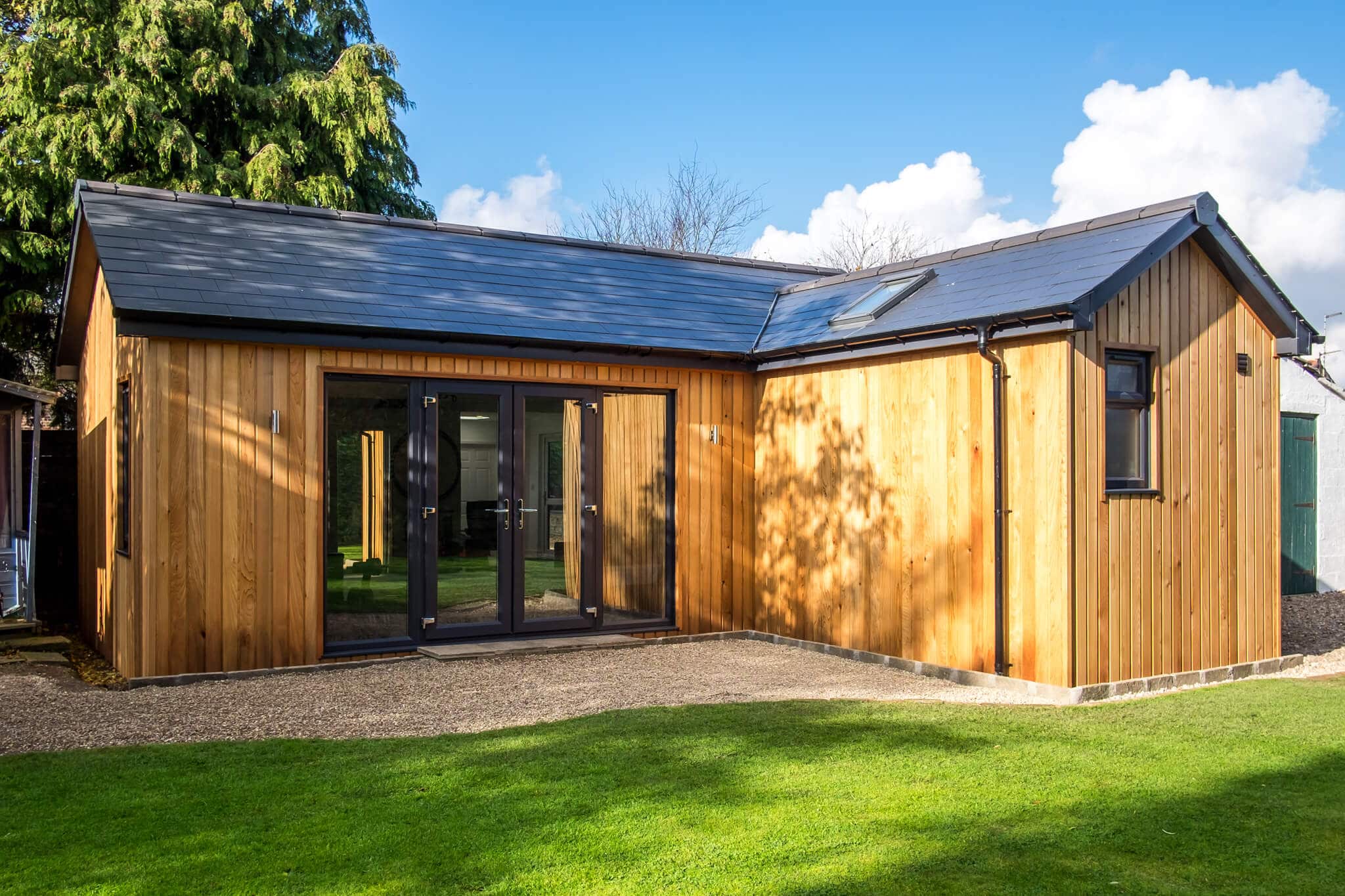
As remote and hybrid working has become so popular, many UK homeowners are investing in garden offices to separate work life from home life. But one common issue remains: how to get a reliable internet connection out to your garden workspace. Whether you’re taking video calls, uploading large files, or simply streaming music while you work, having a strong, stable WiFi connection is essential.
Thankfully, there are several tried-and-tested ways to extend your home WiFi to your garden office. Below are six effective methods, each with its own pros, cons, and ideal scenarios.
WiFi Range Extenders (Repeaters)
WiFi range extenders are one of the easiest and most budget-friendly options. These plug-in devices take the existing WiFi signal from your house and rebroadcast it further, boosting the signal towards your garden office.
They’re simple to set up and don’t require any technical knowledge. However, they can significantly reduce your connection speed and may struggle to transmit through thick walls or over long distances. As such, this solution is best suited to smaller gardens where the office is relatively close to the house typically within 10–15 metres.
Mesh WiFi Systems
Mesh systems offer a more advanced solution by using multiple nodes to create a single, seamless network that covers your entire home and garden. The nodes communicate with each other to provide a consistent signal throughout your property, eliminating dead zones.
These systems are ideal for larger homes or gardens with awkward layouts. They’re easy to manage through smartphone apps and can be expanded by adding more nodes. While they do come at a higher cost compared to basic extenders, the improvement in reliability and coverage is usually worth it.
Powerline Adapters with WiFi
Powerline adapters use your home’s electrical wiring to transmit internet data. You plug one adapter into a socket near your main router, and the other into a socket in your garden room. Many models also include built-in WiFi functionality, allowing you to create a wireless hotspot at the receiving end.
This solution is generally reliable and offers decent speeds. However, its effectiveness depends heavily on the quality and layout of your electrical wiring. If your garden office runs on a separate electrical circuit from your house, powerline adapters may not work effectively or at all.
Outdoor Ethernet Cable
If you’re looking for a permanent and rock-solid solution, running an outdoor-rated Ethernet cable from your router to your garden office is hard to beat. It offers the fastest and most consistent connection possible, completely unaffected by interference or distance.
However, this method does require more effort. You’ll likely need to dig a trench or use protective conduit to run the cable safely, and professional installation is recommended. That said, for those who rely on ultra-reliable internet for work, video calls, or large file uploads, this is often the best long-term option.
Point-to-Point (P2P) Wireless Bridge
A P2P wireless bridge involves placing two directional antennas one on your home and one on your garden room that send a wireless signal between each other. This creates a private, high-speed link between your home router and the garden office.
This is a highly effective method for large properties or where running a cable is impractical. It requires a clear line of sight between the two antennas and can be a bit more complex to install, but the result is a stable and fast connection over long distances. It’s often used in commercial settings, but it’s increasingly popular for high-end home offices too.
4G or 5G Mobile Broadband Router
For those in rural areas or with particularly long gardens, a mobile broadband router could be the answer. These routers use a SIM card to connect to the mobile network, allowing you to access the internet independently of your home broadband.
It’s a quick and flexible option just plug it in and go. However, signal strength can vary depending on your location, and you’ll need a good data plan, especially if you’re a heavy user. In some cases, an external antenna can help boost reception.
Plan for Connectivity When Designing Your Garden Room
Each of the methods above has its own strengths depending on your garden layout, budget, and usage needs. If you’re in the early stages of planning a garden office, it’s wise to consider your internet connection at the same time as your design and construction plans. That way, you can avoid costly adjustments down the line and ensure a seamless remote working experience from day one.
Need a Garden Room with Seamless Connectivity?
We design and build bespoke garden offices across the UK, fully equipped for modern working life. Our team can help you plan not only the layout, insulation and style, but also the connectivity options, ensuring that your new workspace is beautiful, functional, and fully online from the moment you move in.
Contact us today to book your free design consultation.